What to Know About Korea’s Location, Cities, and Four Seasons
Welcome to our South Korea Travel Guide for first-time visitors! 🇰🇷 If you are planning your very first trip to South Korea, you might feel overwhelmed by the amount of information out there—where to go, when to visit, what to expect, and how to prepare. That’s exactly why we created this two-part series of essential travel tips.
In this Part 1, we’ll cover:
South Korea’s Location – so you know where the country is situated and how to get here.
Major Cities to Visit – an overview of the must-see destinations beyond just Seoul.
Korea’s Four Seasons – understanding the weather and best times to travel.
These are the foundations every traveler should know before stepping into Korea.
In Part 2, we’ll dive into:
Korean culture,
the basics of language,
practical travel information,
and insider tips to make your trip smoother.
👉 At the end of this post, you’ll find a link to Part 2. Don’t miss it if you want the full picture of what it’s like to travel in South Korea!
1. Where Is South Korea Located?
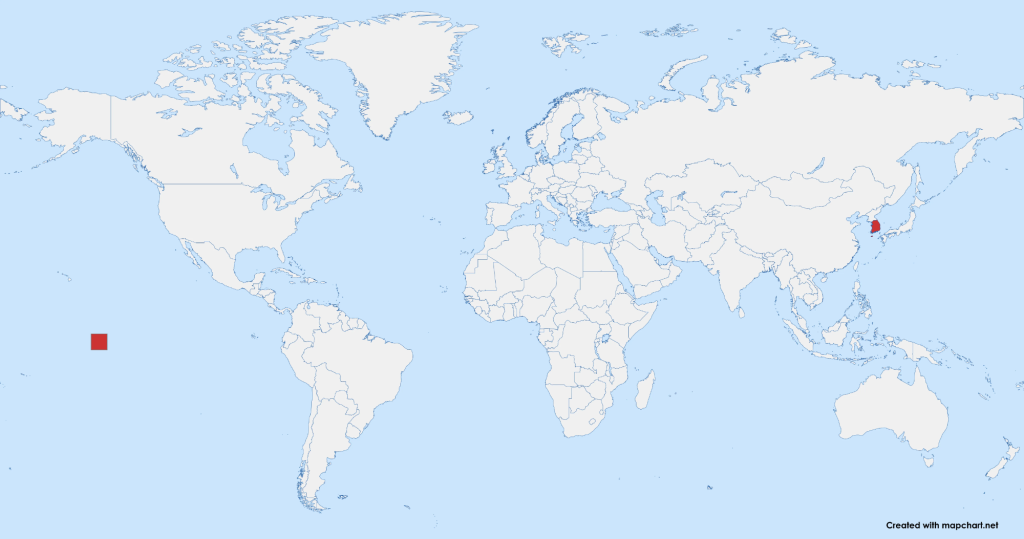
South Korea is a country located in East Asia, positioned between China and Japan. To the north, it shares a border with North Korea, making it one of the few divided nations in the world.
"World map highlighting South Korea in red, located in East Asia between China and Japan.”
The red-highlighted area on the map represents South Korea. You can immediately see how small it looks compared to the surrounding regions.
Korean Peninsula:
Surrounded by Sea on Three Sides
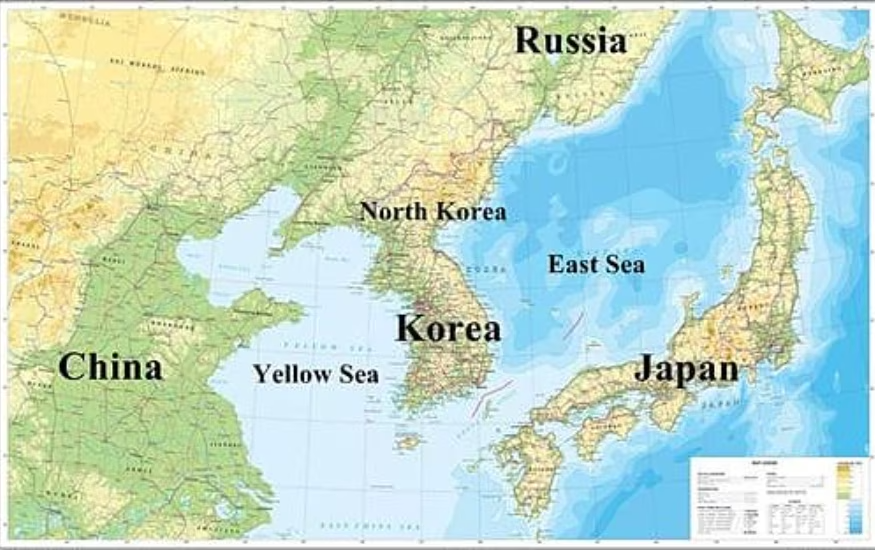
“Map of the Korean Peninsula, showing South Korea surrounded by the East Sea, Yellow Sea, and South Sea, with neighboring countries China, Japan, Russia, and North Korea.”
South Korea is surrounded by the sea on three sides.
To the east lies the East Sea.
To the west is the Yellow Sea.
To the south stretches the South Sea.
Because of this unique geography, you can reach the ocean within a relatively short time from almost anywhere in the country, and Korea has developed a rich seafood cuisine culture.
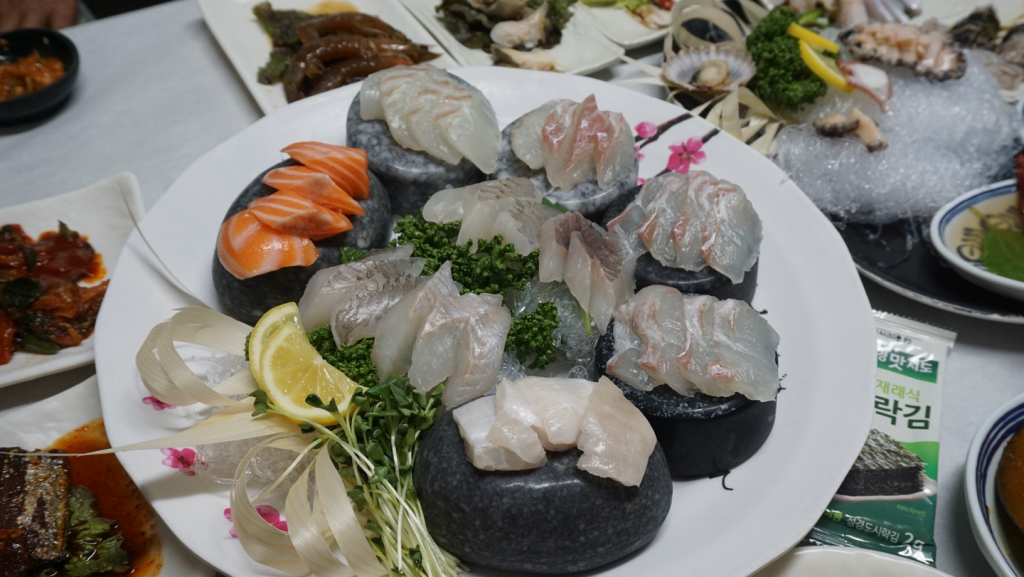
East Sea – Famous for Squid and Fresh Sashimi
“A platter of fresh Korean sashimi (Hwe), a signature seafood dish from the East Sea, featuring squid and assorted raw fish.”
Features : The East Sea is known for its deep, cold waters and clear conditions, making it famous for sashimi, squid, and snow crabs.
Signature Dishes:
Ojingeo Sookhoe(Steamed Squid) – Freshly caught squid is lightly blanched and enjoyed with a spicy dipping sauce.
Hwe (Korean-style sashimi) – A must-try delicacy commonly found along the beaches of the East Coast.
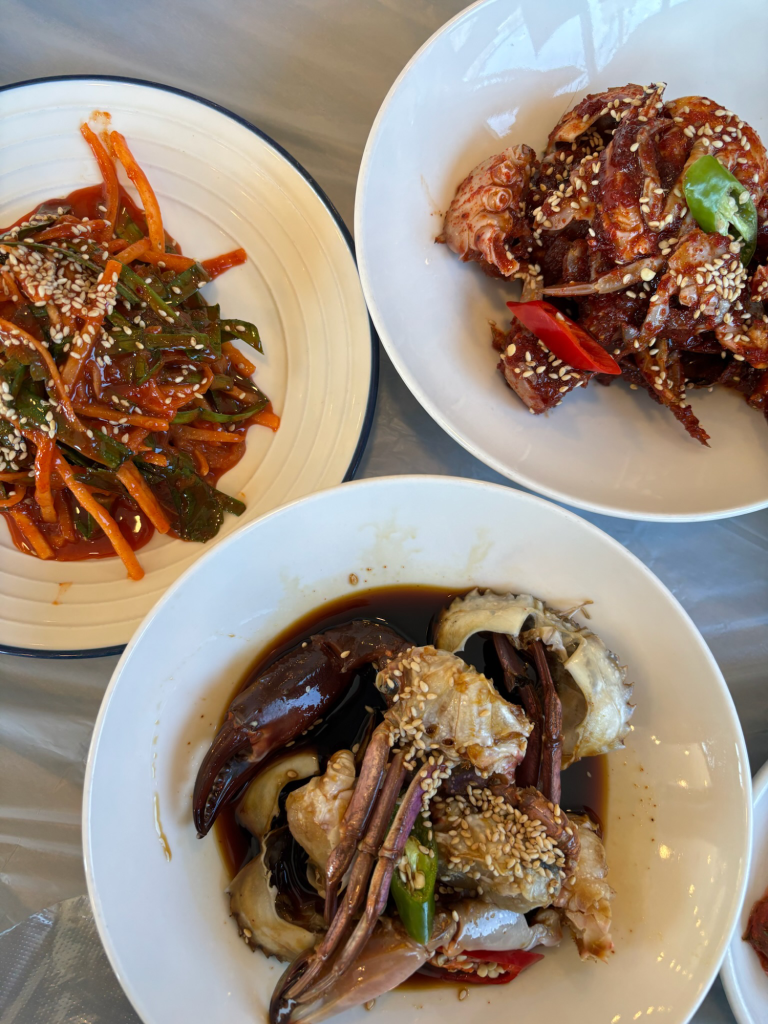
Yellow Sea – Famous for Blue Crabs and Fresh Clams
“Soy sauce marinated blue crab (Ganjang Gejang), a signature seafood dish from Korea’s West Sea, often enjoyed with rice.”
Features: The West Sea (Yellow Sea) is characterized by vast tidal flats and shallow waters, making it rich in shellfish, crabs, and octopus.
Signature Dishes:
Ganjang Gejang(Soy Sauce Marinated Crab) – A famous delicacy made by marinating fresh blue crabs from the West Sea in soy sauce, often called a “rice thief” because it pairs so well with rice.
Clam Dishes – The West Coast is also famous for clam kalguksu (noodle soup with clams) and grilled clams, both loved by seafood enthusiasts.
South Sea – Famous for Oysters and Anchovies
Features: The South Sea is known for its warm waters and numerous islands, making it rich in oysters, anchovies, and other seafood.
Signature Dishes:
Gul Muchim(Tongyeong Oyster Salad) / Gul Jeon(Oyster Pancakes) – Fresh and plump oysters from the South Sea are considered a winter delicacy in Korea.
Anchovy Ssam-bap – A regional specialty where anchovies are wrapped with fresh vegetables and rice, offering a unique taste of the southern coast.
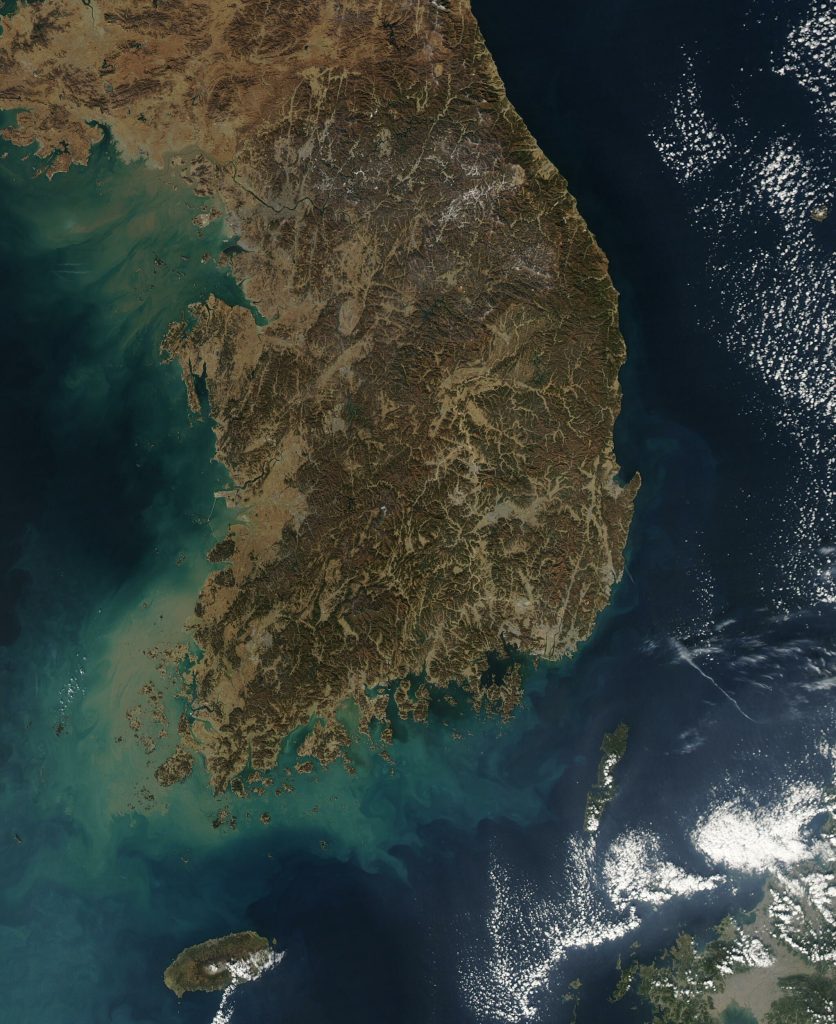
Mountains in South Korea – 70% of the Country’s Land Is Mountainous
“Satellite image of South Korea, where around 70% of the land consists of mountains, a unique feature of the country’s landscape.”
The green areas you see in the photo are all mountains. As shown here, about 70% of South Korea’s land is mountainous.
This is why when you travel through Korean cities, you often see mountains in the distance. On weekends, it’s common to spot locals hiking.
The unique charm of Korea lies in the close coexistence of mountains and the sea.
Famous Mountains in South Korea
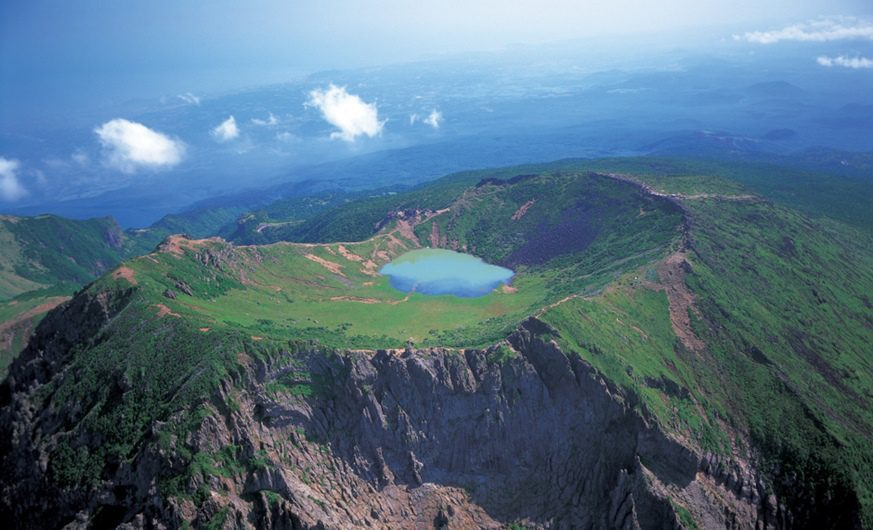
Hallasan (Jeju Island)
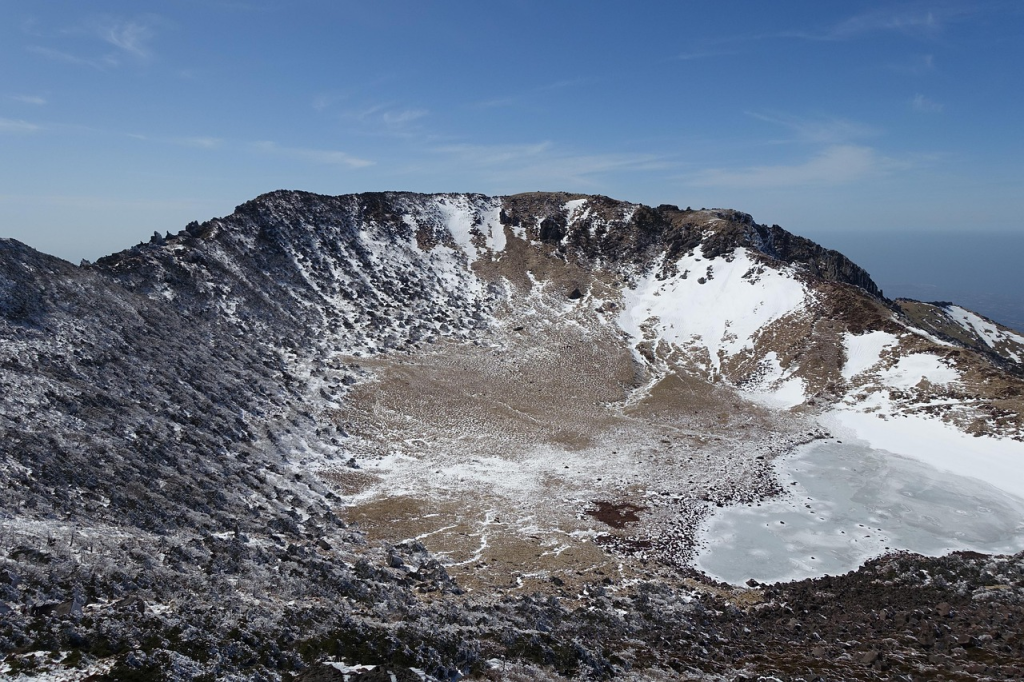
“Hallasan (1,947m), South Korea’s highest mountain and the symbol of Jeju Island, with the famous Baengnokdam crater at its peak.”
The highest mountain in South Korea (1,947m) and the symbol of Jeju Island. From its summit, you can see Baengnokdam, a crater lake. In winter, the snow-covered scenery is breathtaking, while in spring azaleas bloom, in summer lush forests spread across the trails, and in autumn silver grass fields welcome visitors.
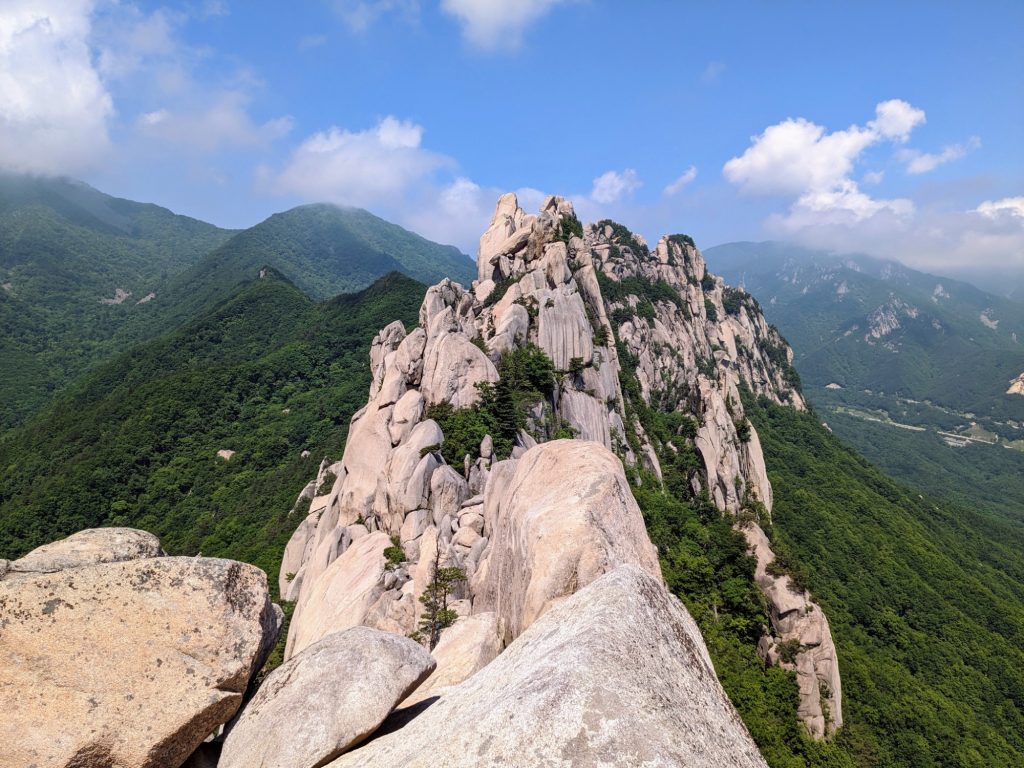
Seoraksan (Gangwon Province)
“Seoraksan, renowned for its dramatic granite cliffs and scenic hiking trails, one of Korea’s most popular mountains in all four seasons.”
Famous for its dramatic cliffs and uniquely shaped granite peaks, Seoraksan boasts a majestic landscape. It is especially renowned for its autumn foliage, attracting countless tourists every year. In winter, the snow-covered scenery is stunning, while in spring azaleas bloom, in summer the green forests offer refreshing hikes — making it a destination full of charm in all four seasons.
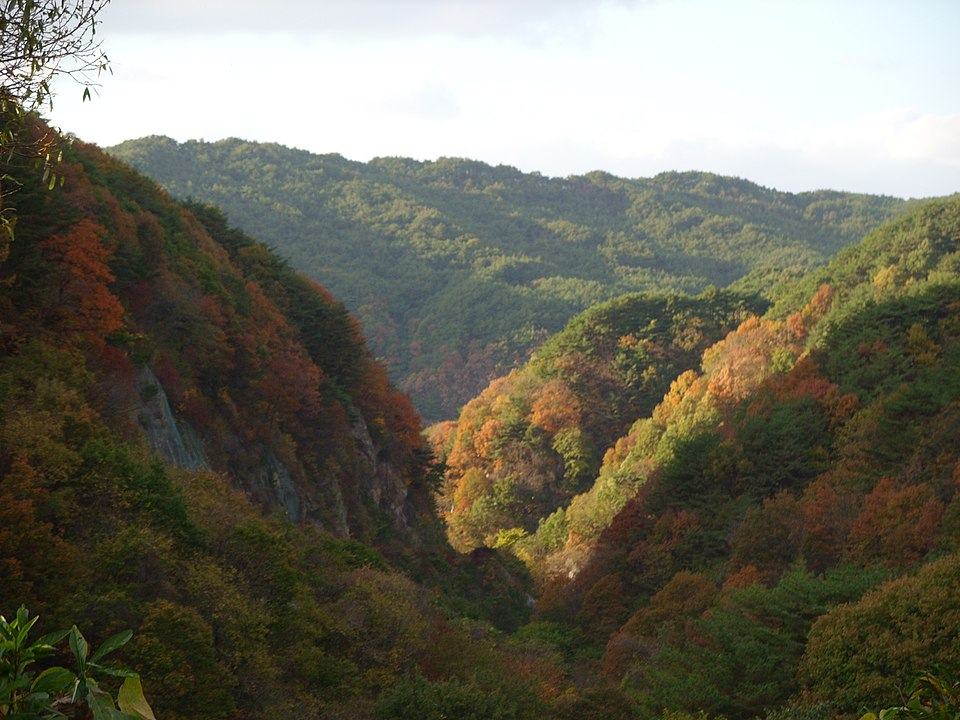
Jirisan (Border of Jeolla, Gyeongsang, and Gyeongnam Provinces)
“Jirisan (1,915m), the second-highest mountain in South Korea, famous for its vast national park and stunning autumn scenery.”
The second-highest mountain in South Korea (1,915m) and the largest national park in the southern part of the peninsula. With its broad and deep ridges, Jirisan has long been regarded as a sacred mountain where hermits and monks sought spiritual retreat. In spring it is covered with cherry blossoms and azaleas, in summer it offers cool valleys and lush greenery, in autumn fiery foliage, and in winter snow-covered peaks — showcasing a different beauty each season.
Seasonal Mountain Scenery in Korea – Hiking in Spring, Summer, Fall, and Winter
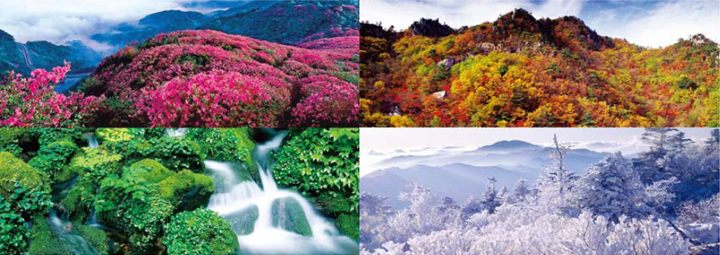
“The four seasons of Korea’s mountains – vibrant spring blossoms, refreshing summer valleys, colorful autumn foliage, and stunning winter snow scenery.”
Spring in Korea’s Mountains 🌸 – The slopes are covered with azaleas, royal azaleas, and wild cherry blossoms, turning the mountains into colorful flower gardens.
Summer Hiking in Korea 🌿 – Dense green forests and cool valleys make summer hiking refreshing, offering shade and natural streams along the trails.
Autumn Foliage in Korea 🍁 – The mountains burst into red, orange, and golden hues, attracting countless visitors. Autumn is the highlight of mountain tourism in South Korea.
Winter Mountains in Korea ❄️ – Snow blankets the peaks, creating magical winter landscapes. It’s also the perfect season to enjoy both snowy hikes and winter sports.
2. Best Cities to Visit in South Korea
Seoul – The Heart of South Korea
For most travelers, the first step into Korea begins in Seoul. Located less than an hour from Incheon International Airport, Seoul is the capital city and home to over 10 million people. It’s a dynamic destination where history, culture, and modern life blend seamlessly.
A City Where Tradition Meets Modernity
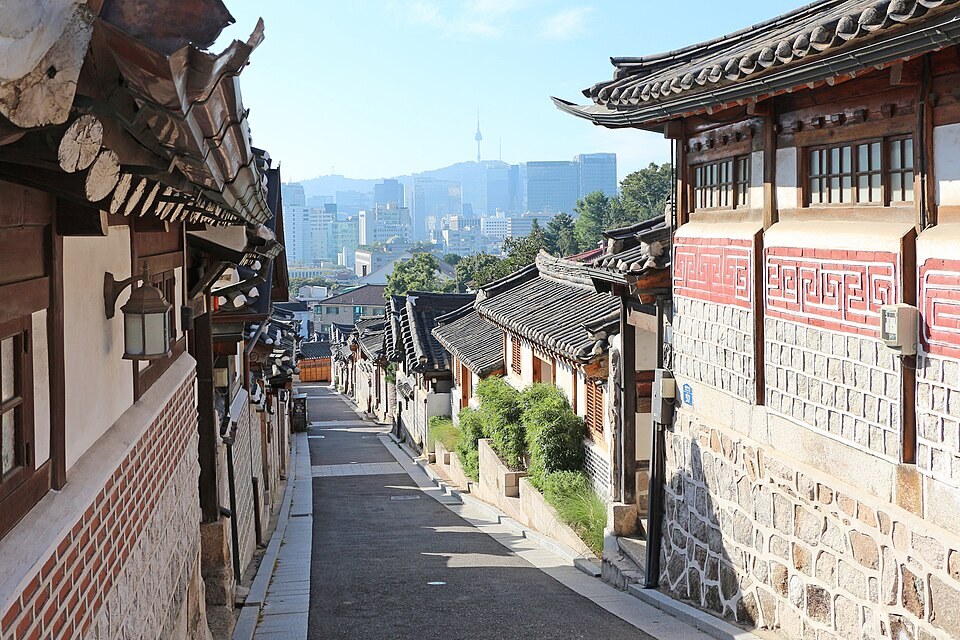
“Bukchon Hanok Village – where Seoul’s traditional hanok houses meet modern city views.”
As the former capital of the Joseon Dynasty, Seoul still preserves stunning palaces like Gyeongbokgung and Changdeokgung right in the middle of the city. Just beyond the tiled roofs of hanok houses, you’ll see futuristic skyscrapers – a contrast that defines Seoul’s unique charm. In one day, you can walk through centuries of history while enjoying the pulse of a modern metropolis.
Han River & Glittering Night Views
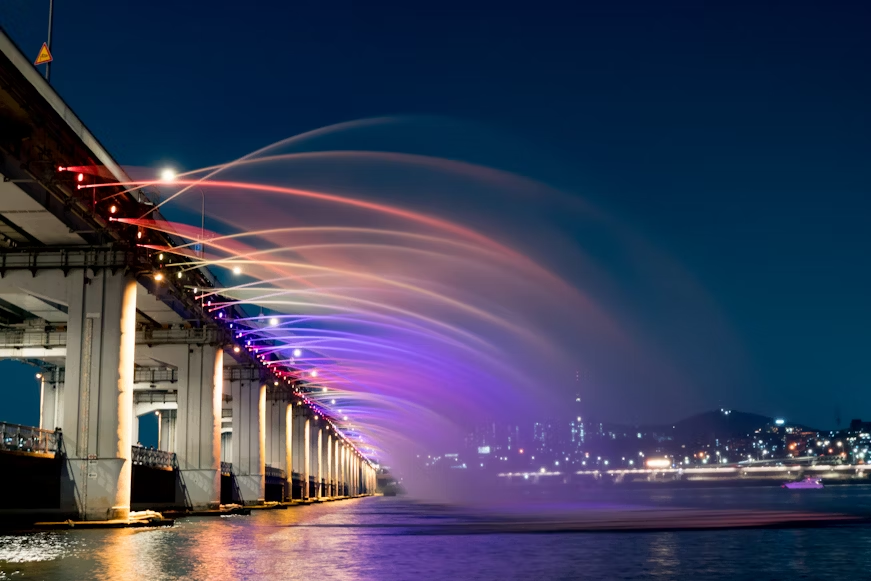
“The Banpo Bridge Rainbow Fountain lighting up Seoul nights along the Han River.”
The Han River runs through the city, offering both locals and visitors a refreshing escape. Rent a bike along the riverside, hop on a Han River cruise, or simply enjoy a picnic by the water. At night, head to Namsan Seoul Tower (N Seoul Tower) for one of the city’s most iconic skyline views. The glowing lights of the city make for unforgettable moments.
A Paradise for Shopping & Food Lovers
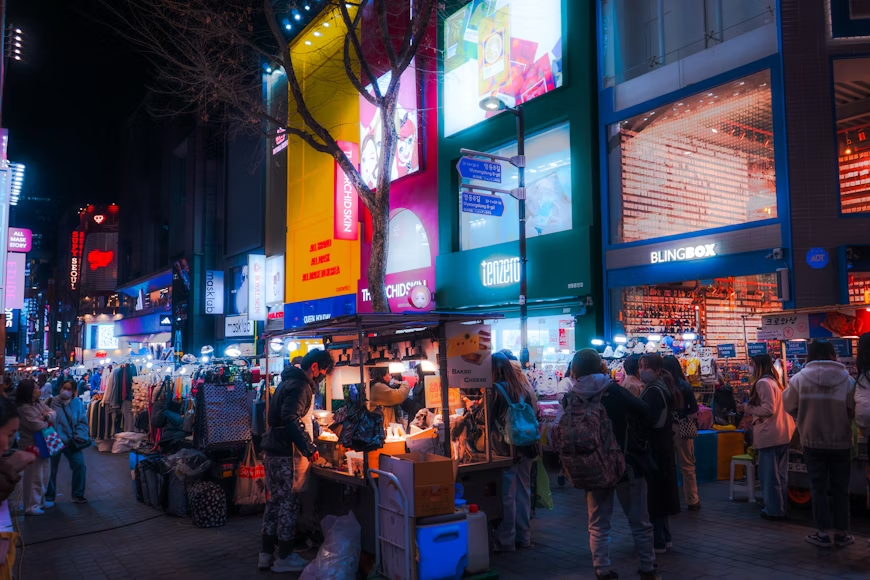
“Myeongdong – the heart of shopping, fashion, and Korean street food in Seoul.”
Seoul is a shopping haven. From Myeongdong’s bustling streets filled with fashion and cosmetics, to the trendy vibes of Hongdae and Gangnam, there’s no shortage of places to explore. Don’t miss the chance to try Korean street food like tteokbokki, soondae, and gimbap at local markets – the fastest way to experience the everyday taste of Korea.
The Center of K-Culture
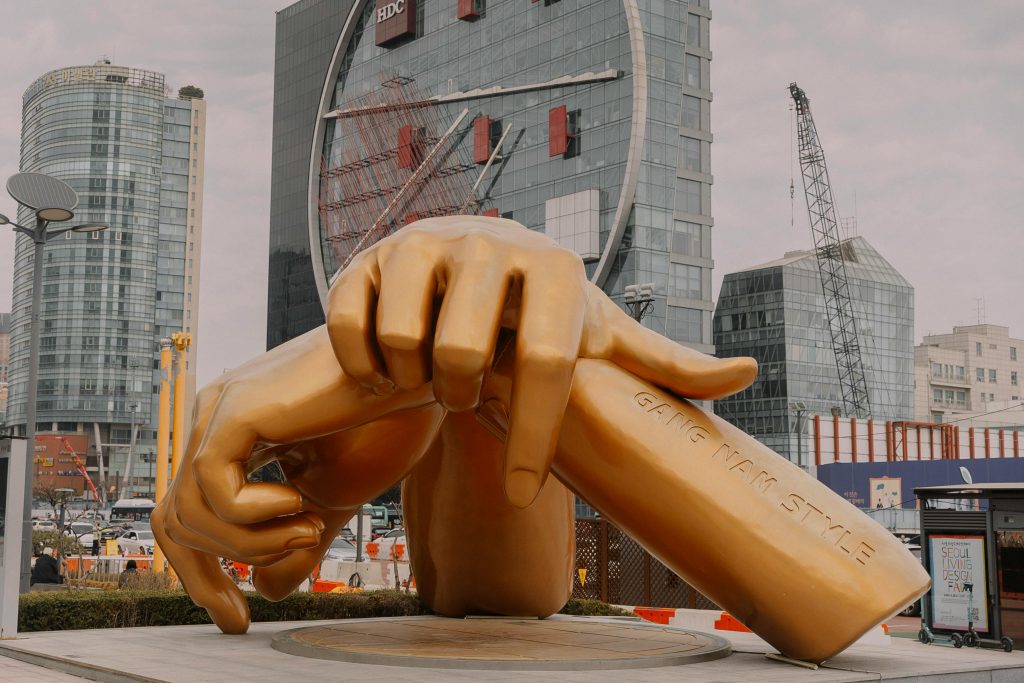
“Gangnam Style Statue in Seoul – a K-pop landmark celebrating Psy’s world-famous hit.”
As the former capital of the Joseon Dynasty, Seoul still preserves stunning palaces like Gyeongbokgung and Changdeokgung right in the middle of the city. Just beyond the tiled roofs of hanok houses, you’ll see futuristic skyscrapers – a contrast that defines Seoul’s unique charm. In one day, you can walk through centuries of history while enjoying the pulse of a modern metropolis.
Busan – Korea’s Vibrant Coastal City
If Seoul is the beating heart of South Korea, then Busan is its face to the sea. As Korea’s second-largest city and biggest port, Busan is loved by travelers for its lively beaches, fresh seafood, and laid-back coastal vibe.
Beaches and Ocean Views
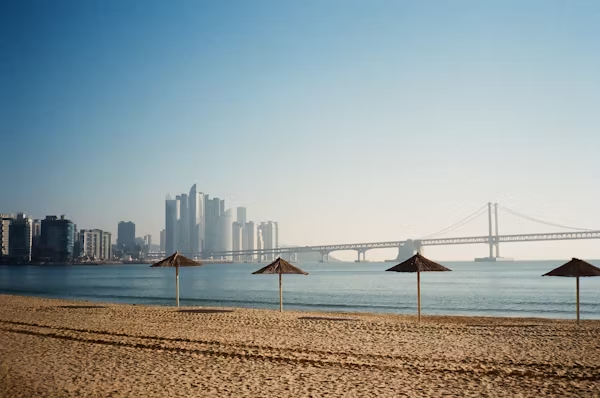
“Gwanglli – Busan’s most famous seaside, with Gwangandaegyo Bridge glowing at night.”
When you think of Busan, the first images that come to mind are Haeundae Beach and Gwangalli Beach. In summer, these beaches transform into a festival-like scene filled with sun, sand, and excitement. In winter, they offer a peaceful retreat with sea breezes and quiet walks. Don’t miss the stunning night view of the Gwangandaegyo Bridge, which sparkles across the ocean and adds to the city’s charm.
The Taste of the Sea – Jagalchi Market
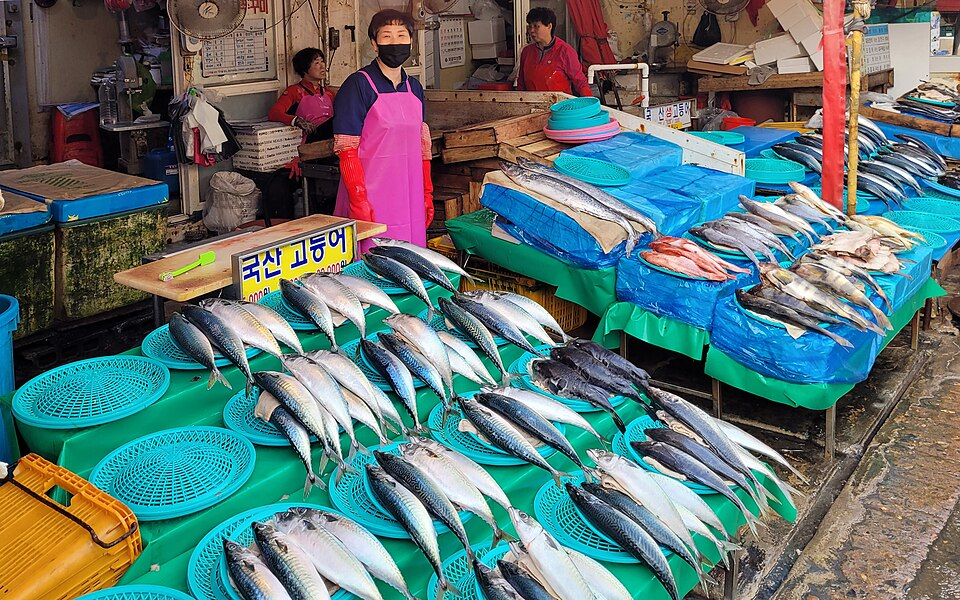
Jagalchi Fish Market – the best place to taste Busan’s freshest seafood.”
No trip to Busan is complete without visiting Jagalchi Fish Market. Here, you can taste freshly sliced raw fish on the spot and explore endless seafood options, from king crabs to sea squirts. Local favorites like Busan-style fish cakes and pork rice soup (dwaeji-gukbap) are also a must-try for food lovers.
The City of Busan International Film Festival
Busan is home to the famous Busan International Film Festival (BIFF), one of Asia’s most important film events. At BIFF Square and the Busan Cinema Center, you’ll find a mix of cinema culture, street performances, and a youthful, energetic vibe all year round.
Harmony of Mountains and the Sea
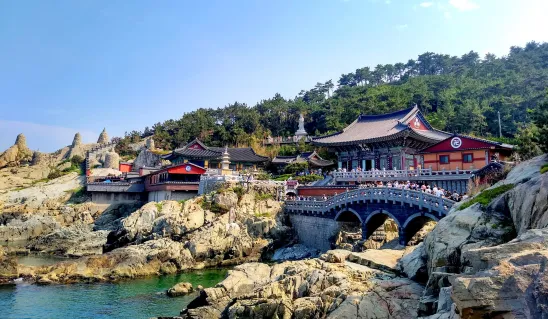
“Haedong Yonggungsa Temple – a rare oceanside Buddhist temple in South Korea.”
What makes Busan unique is the perfect blend of ocean and mountains. Visit Haedong Yonggungsa Temple, dramatically perched on seaside cliffs, or enjoy the rugged beauty of Taejongdae cliffs. Walking along coastal trails, you’ll quickly understand why Busan captures so many travelers’ hearts.
Jeju Island – Korea’s Paradise Island
Jeju Island is one of the most beloved destinations for Koreans and a must-visit island for international travelers. With its volcanic landscapes, unique culture, and slower pace of life, Jeju often feels like a different country within Korea. Landscapes
The symbol of Jeju is without doubt Hallasan Mountain, Korea’s tallest peak rising from the center of the island. The summit crater, Baeknokdam, offers breathtaking views that change dramatically with each season. Spring brings azaleas and royal azaleas, summer is filled with lush green meadows, autumn paints the slopes with colorful leaves, and winter covers the mountain in snow and ice.
Seongsan Ilchulbong and Olle Trails
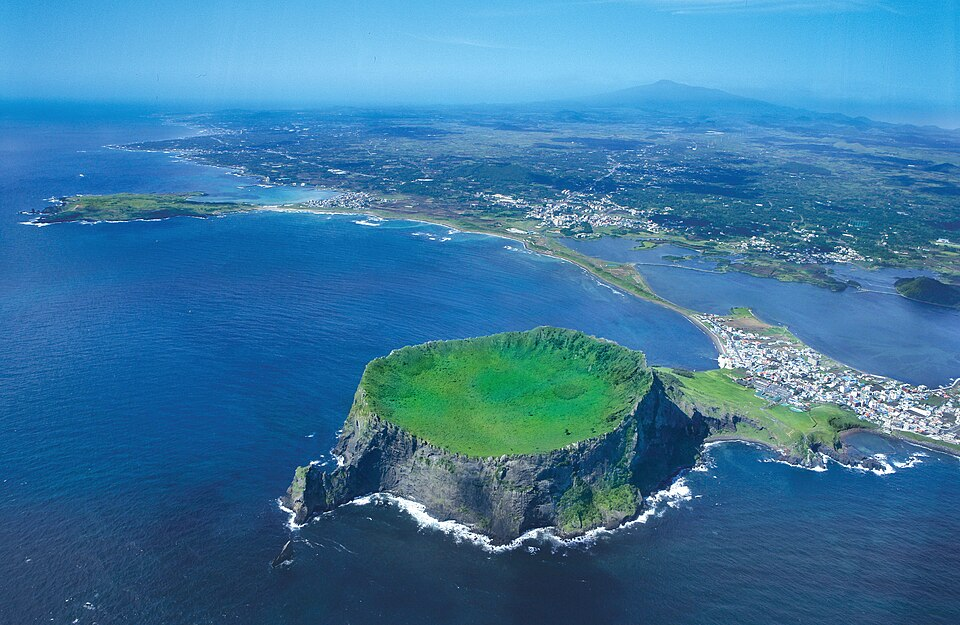
“Seongsan Ilchulbong – the iconic Sunrise Peak of Jeju Island.”
At the eastern tip of Jeju stands Seongsan Ilchulbong (Sunrise Peak), a UNESCO World Natural Heritage site famous for its spectacular sunrise. The island is also crisscrossed with the Olle walking trails, guiding travelers along cliffs, fishing villages, and tangerine orchards – the perfect way to experience Jeju’s charm on foot.
Ocean and Fresh Seafood
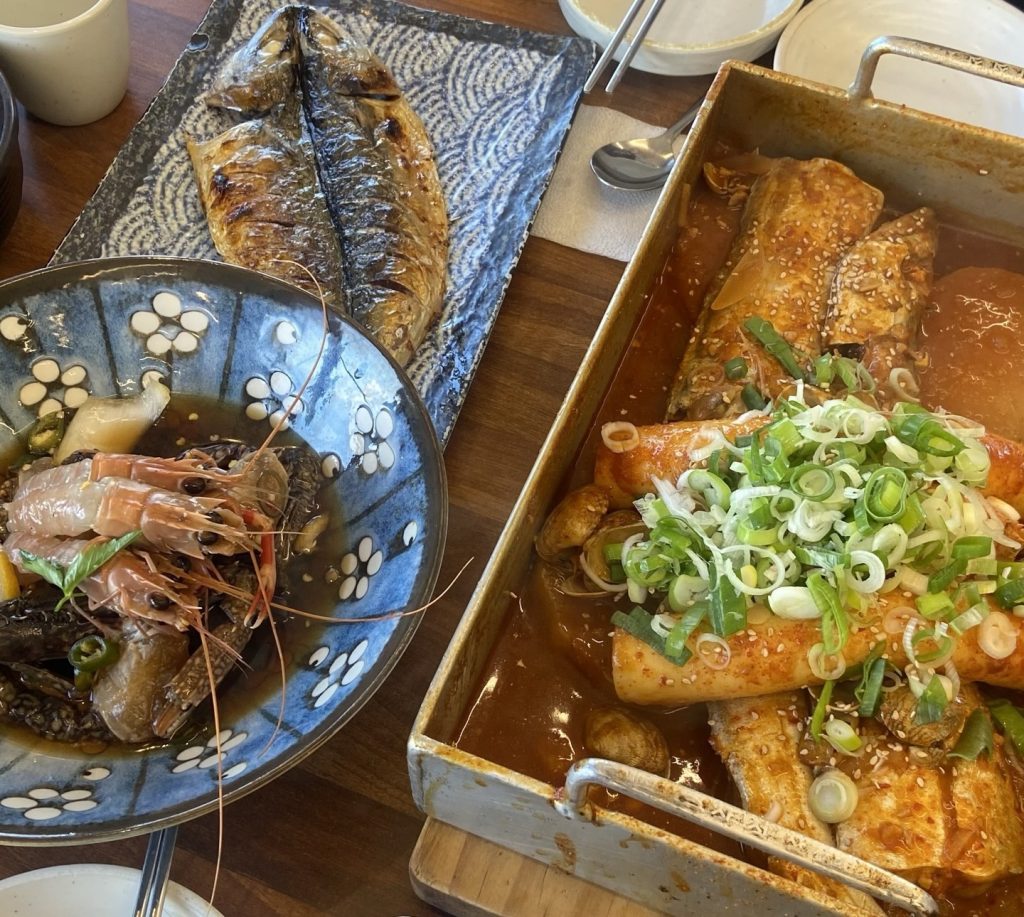
“Taste Jeju – fresh seafood dishes that define the island’s cuisine.”
Jeju is surrounded by the ocean, making it a paradise for water activities like swimming, surfing, and snorkeling. The island is also famous for its seafood, including silver hairtail, abalone, sea urchin, and raw mackerel. Seasonal experiences like tangerine picking in winter add another layer of fun to your trip.
Jeju’s Unique Culture
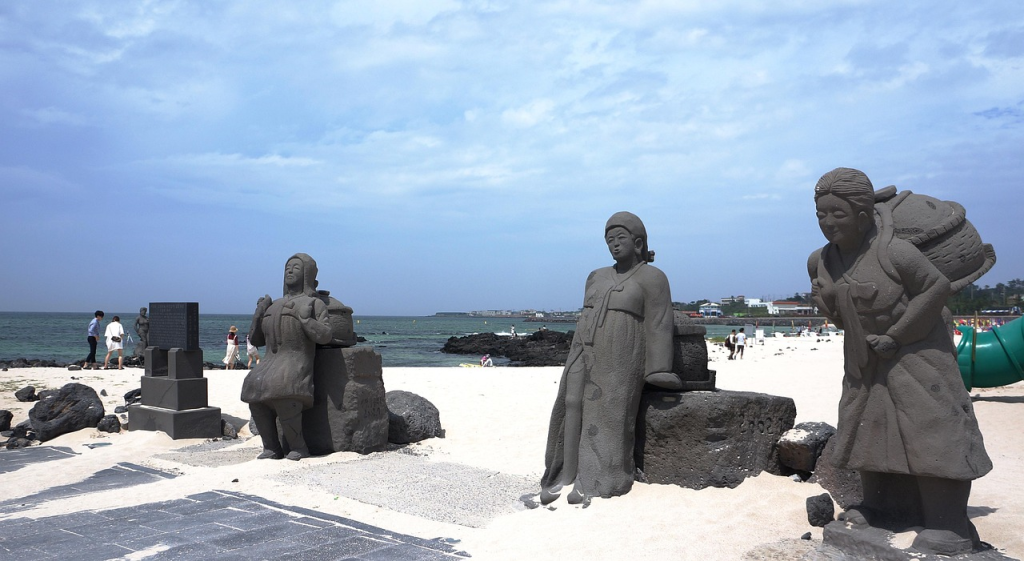
“Jeju’s unique culture – dol hareubang statues and haenyeo traditions.”
What makes Jeju truly special is its culture. From stone walls and dol hareubang statues to the legendary haenyeo (female divers) who harvest seafood by hand, Jeju offers experiences that can’t be found anywhere else in Korea. Walking along the coast, you’ll feel the island’s deep traditions blending with its natural beauty.
Gyeongju – The Ancient Capital of Silla
Gyeongju was once the capital of the Silla Kingdom, leading Korean politics and culture for over a thousand years. Today, the entire city feels like a living museum, earning it the nickname “the museum without walls.”
UNESCO World Heritage Sites
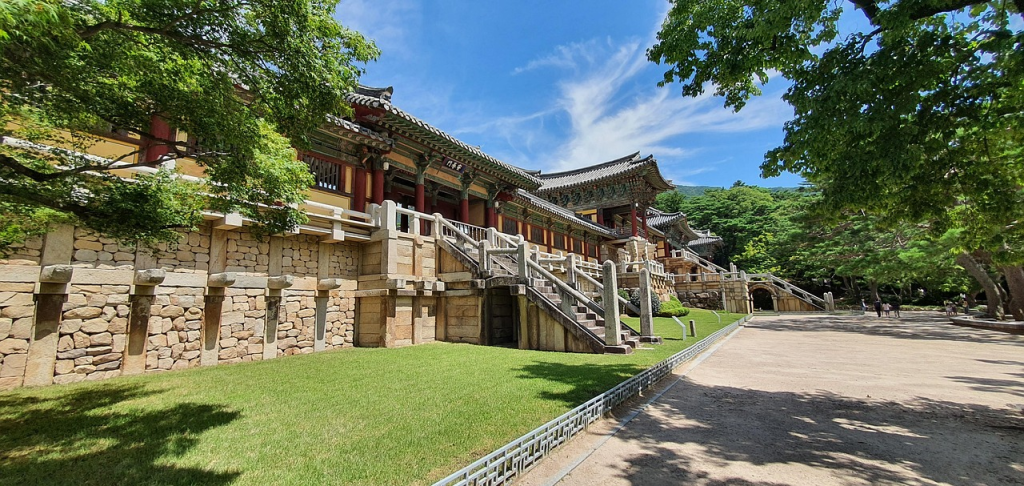
"Bulguksa Temple – A UNESCO World Heritage site showcasing Silla-era Buddhist culture"
One cannot miss Bulguksa Temple and Seokguram Grotto, both UNESCO World Heritage sites. Their intricate Buddhist architecture and artistry make them must-visit landmarks for understanding Korea’s traditional culture.
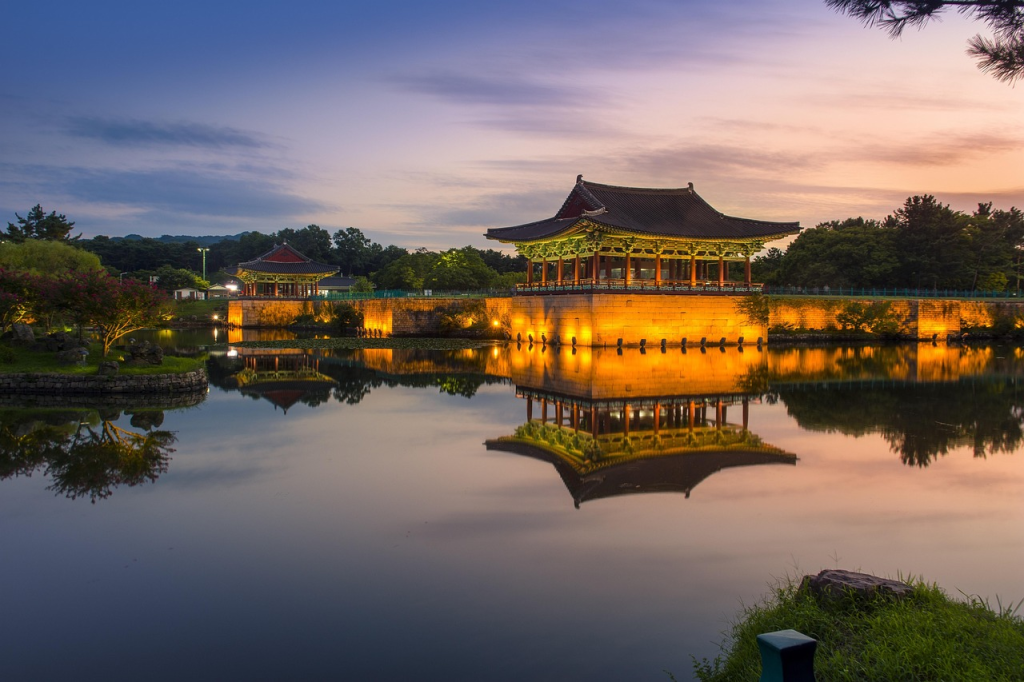
Donggung Palace and Wolji Pond illuminated at night with reflections on the water in Gyeongju
"Donggung Palace and Wolji Pond – Stunning night view with historic reflections on the water"
By day, you’ll see tombs and temples, but at night, Donggung Palace and Wolji Pond (formerly Anapji) light up beautifully. The palace reflected in the water creates a magical atmosphere, making it a perfect photography spot.
Ancient Traces of the Silla Dynasty
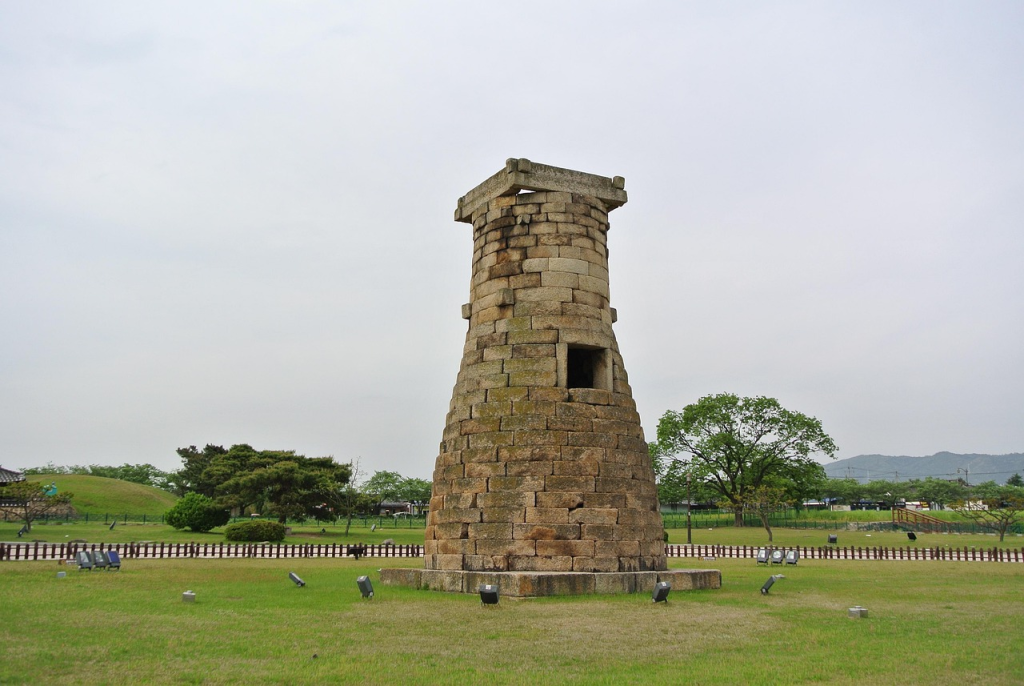
"Cheomseongdae Observatory – The oldest astronomical observatory in Asia, built during the Silla Dynasty"
Walking around Gyeongju, history greets you at every turn. Visit Cheomseongdae Observatory (the oldest in Asia), the royal tombs at Daereungwon, and temple ruins such as Hwangnyongsa and Bunhwangsa.
Special Experiences in Gyeongju
For a deeper immersion, rent a hanbok (traditional Korean outfit) and stroll through heritage sites. Don’t forget to try Hwangnam Bread, Gyeongju’s famous local delicacy, loved by both locals and travelers.
Jeonju – The City of Tradition and Flavor
Jeonju is where the essence of traditional Korea truly comes alive. Unlike Seoul’s blend of modern and traditional, Jeonju offers travelers a more authentic and nostalgic glimpse into Korea’s past.
Jeonju Hanok Village
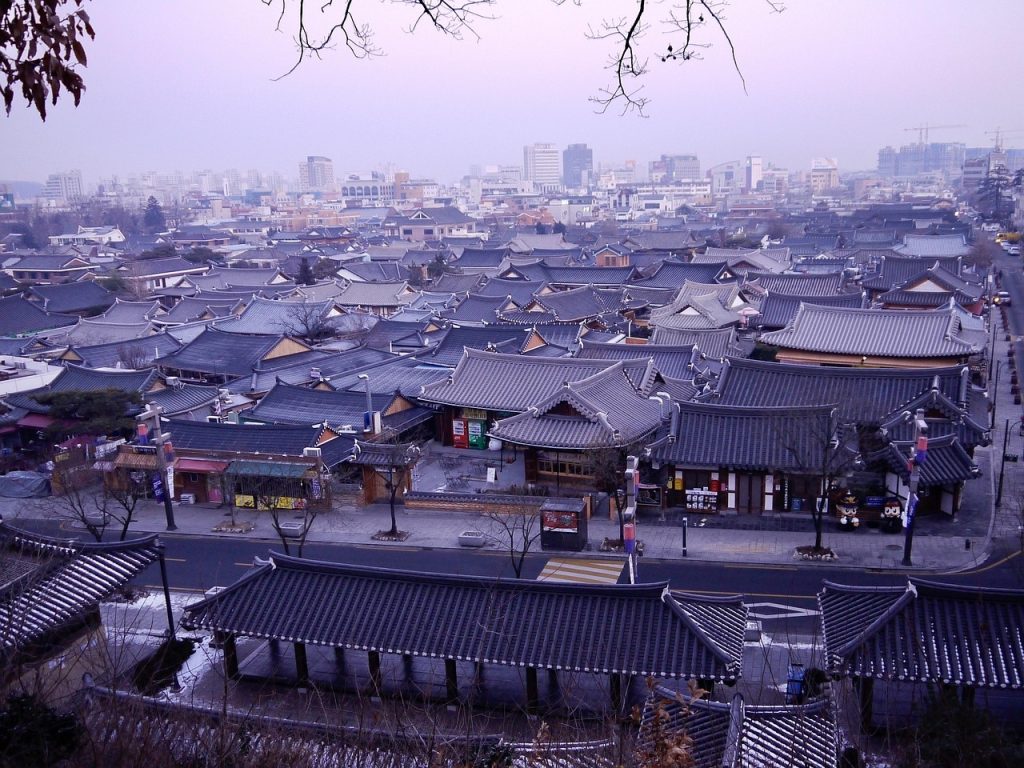
"Jeonju Hanok Village – A cultural hub with over 700 traditional Korean houses"
The highlight of Jeonju is definitely the Hanok Village, home to over 700 traditional Korean houses. Walking through its alleys filled with tea houses, artisan shops, and hanbok rentals makes you feel like stepping back in time.
Jeonju Bibimbap – A Culinary Icon
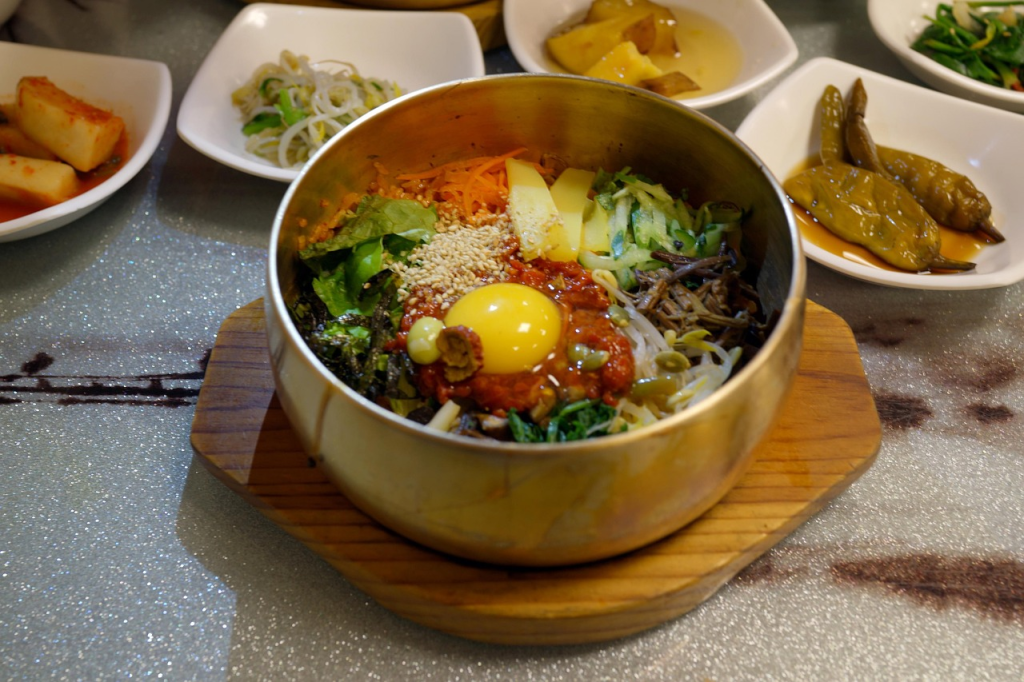
"Jeonju Bibimbap – Korea’s most famous traditional dish, known worldwide"
Jeonju is also known as the food capital of Korea. The world-famous Jeonju Bibimbap—a colorful mix of rice, vegetables, beef, egg, and gochujang (red chili paste)—originates here. Don’t miss Jeonju’s soybean sprout soup (kongnamul gukbap) and traditional Korean table meals with makgeolli.
History and Architecture
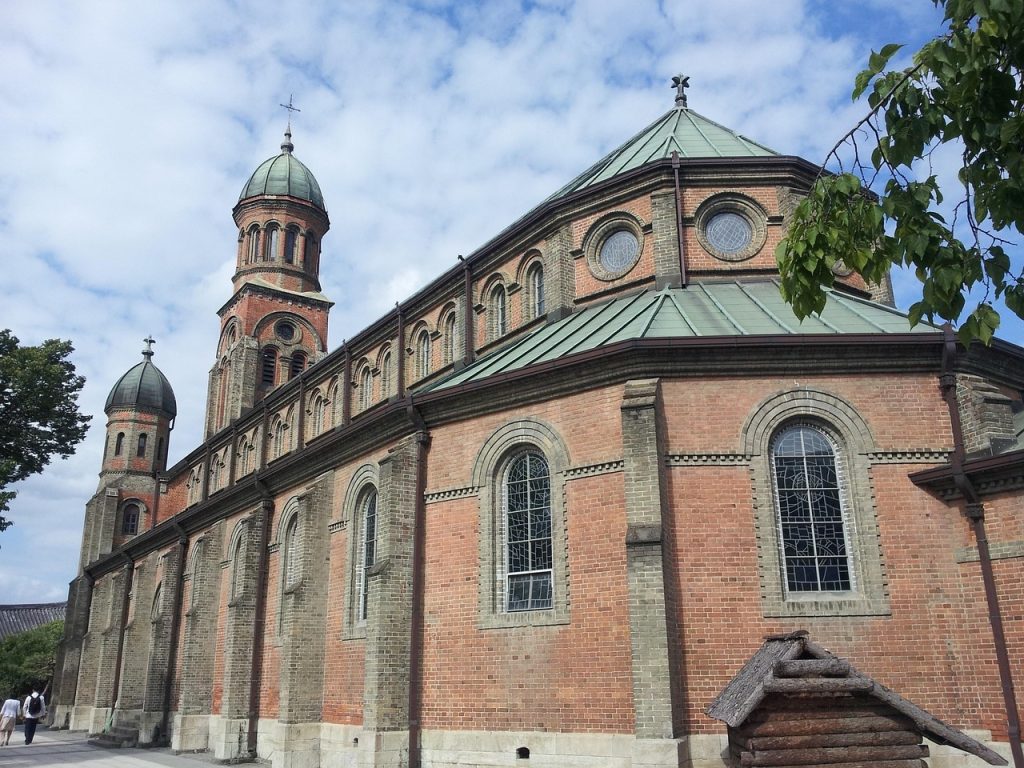
"Jeondong Cathedral – A beautiful Gothic-style Catholic church near Jeonju Hanok Village"
Jeonju is also home to historic sites such as Gyeonggijeon Shrine, which houses the portrait of King Taejo (founder of the Joseon Dynasty), and the Jeondong Catholic Cathedral, an impressive Gothic-style church near Hanok Village.
Festivals and Arts
Every year, Jeonju hosts the Jeonju International Film Festival (JIFF), a global stage for independent cinema. Visitors can also enjoy traditional Korean arts such as pansori performances, offering a deeper cultural experience.
3. Four Seasons in Korea: A Complete Travel Guide to Spring, Summer, Fall, and Winter
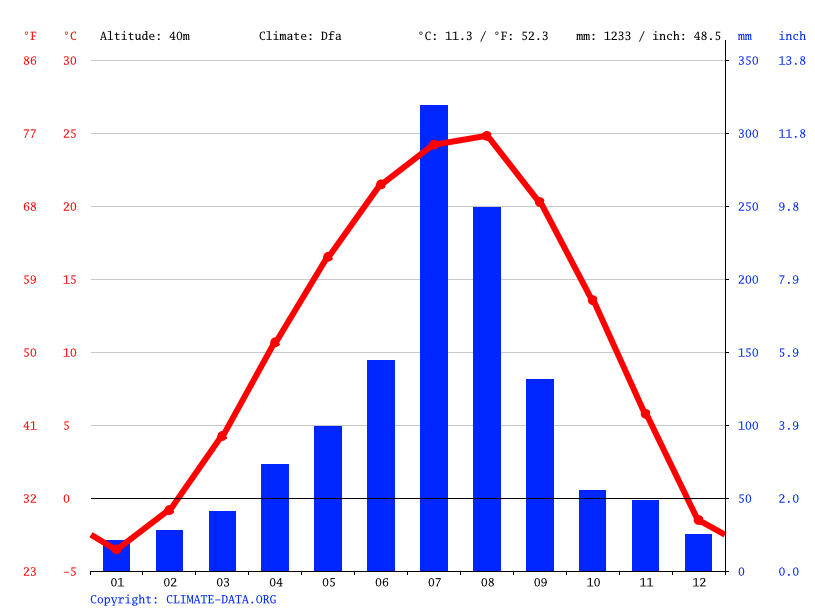
"Climate of Korea – A country with four distinct seasons, from snowy winters to hot, rainy summers."
Korea is a country where the four seasons are clearly defined. Depending on when you visit, you’ll experience completely different landscapes and atmospheres. 🌸☀️🍁❄️ Each season brings its own unique charm, so let’s go over what makes spring, summer, fall, and winter special — along with the best outfits to pack and travel destinations that match the season.
🌸 Spring (March–May)
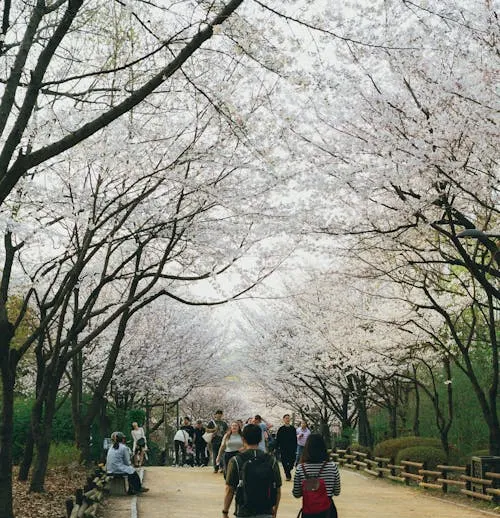
"Cherry blossoms in full bloom in Seoul’s Yeouido Park"
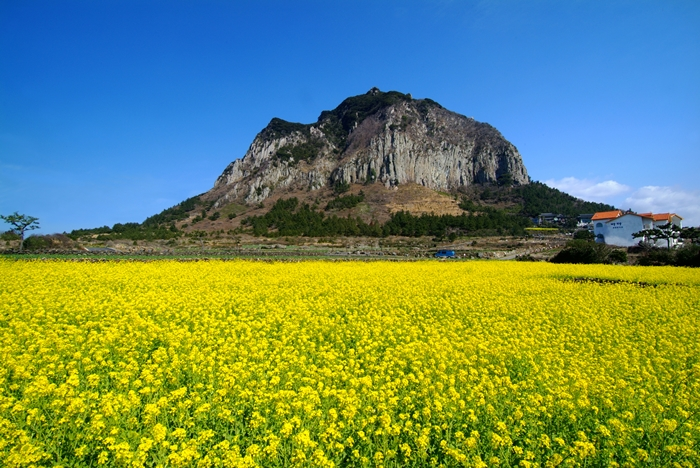
"Vibrant canola fields on Jeju Island in spring"
When the warm breeze starts to blow, Korea becomes a sea of blossoms. Mid-March marks the cherry blossom season, where you can enjoy festivals like the Jinhae Cherry Blossom Festival or stroll under blooming trees in Yeouido, Seoul. On Jeju Island, endless fields of yellow canola flowers create a picture-perfect scene.
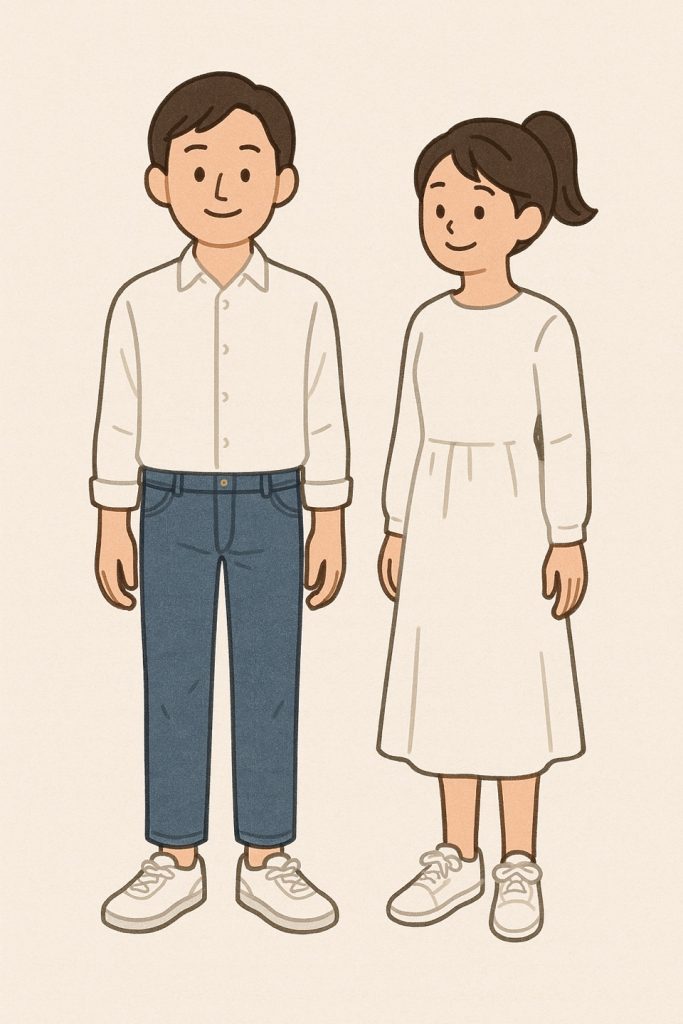
"Spring fashion tip: light layers and long sleeves for cool mornings"
In March, pack a light jacket for chilly mornings and evenings.
April gradually warms up, so bring both long and short sleeves.
By May, T-shirts are perfect for exploring comfortably.
Spring is also one of the best times to travel to Korea — with beautiful weather, affordable accommodation, and fewer local holidays.
🌊 Summer (June–August)
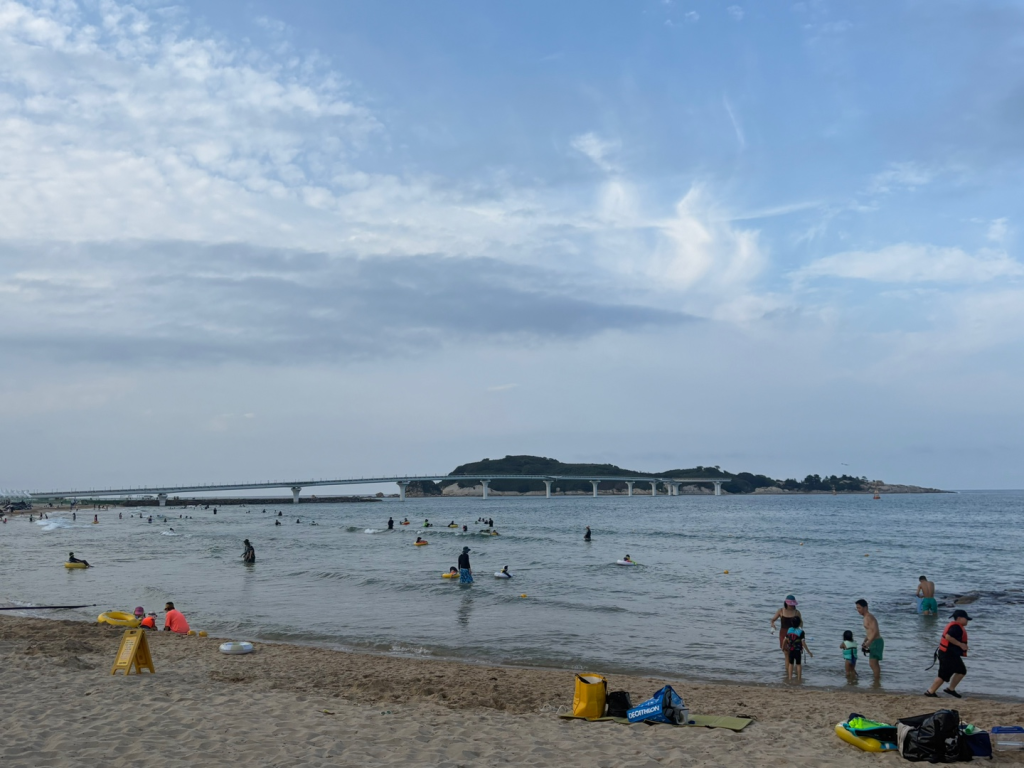
"Summer fun at Goseong Beach"
Summer in Korea is hot and humid, but it’s also the season of the sea . You can swim and sunbathe at Haeundae and Gwangalli Beach in Busan, or enjoy the tropical vibes of Jeju’s beaches.
Do keep in mind — July brings the rainy season , and August sometimes has typhoons. So don’t forget an umbrella or a light raincoat! For clothing, stick to short sleeves, shorts, and sandals for comfort.
"Stay cool in summer: shorts, T-shirts, and sandals"
🍁 Autumn (September–November)
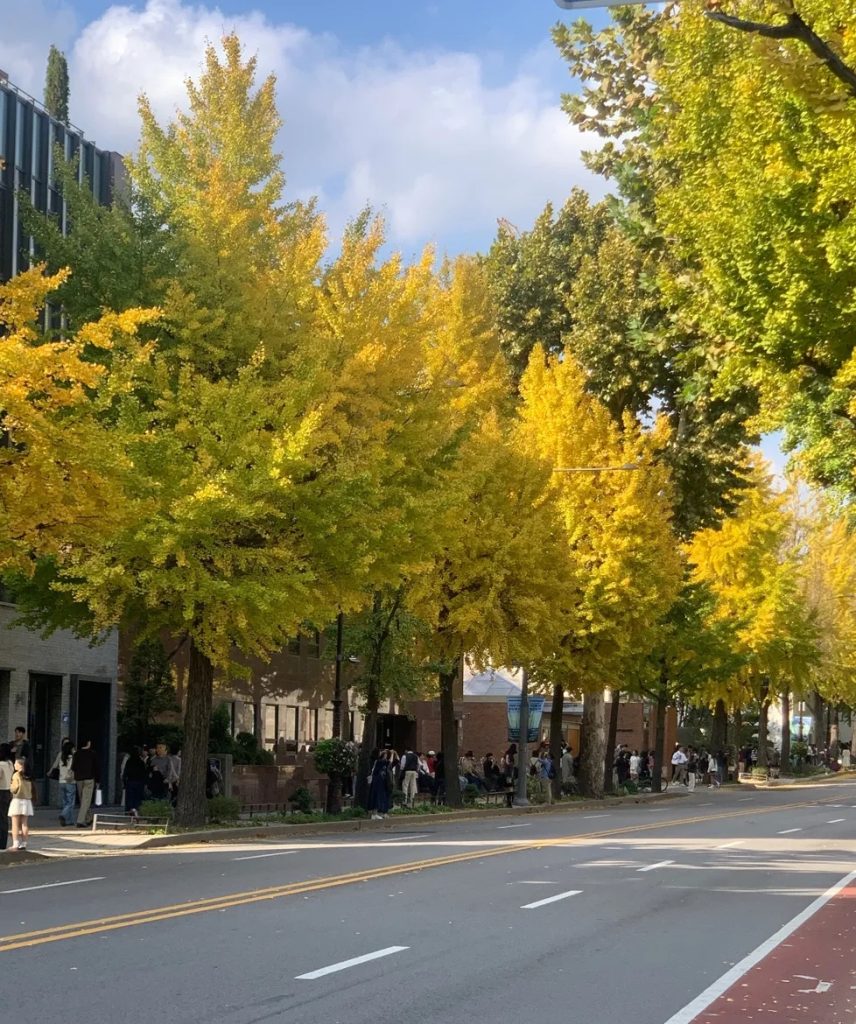
Ask anyone, and they’ll tell you autumn is the best season to visit Korea. The crisp air, deep blue sky, and colorful foliage make it truly magical. Mountains like Seoraksan and Naejangsan are famous for fiery autumn leaves, and in Seoul, the Seoul International Fireworks Festival lights up the night.
"Golden ginkgo-lined streets in Seoul"
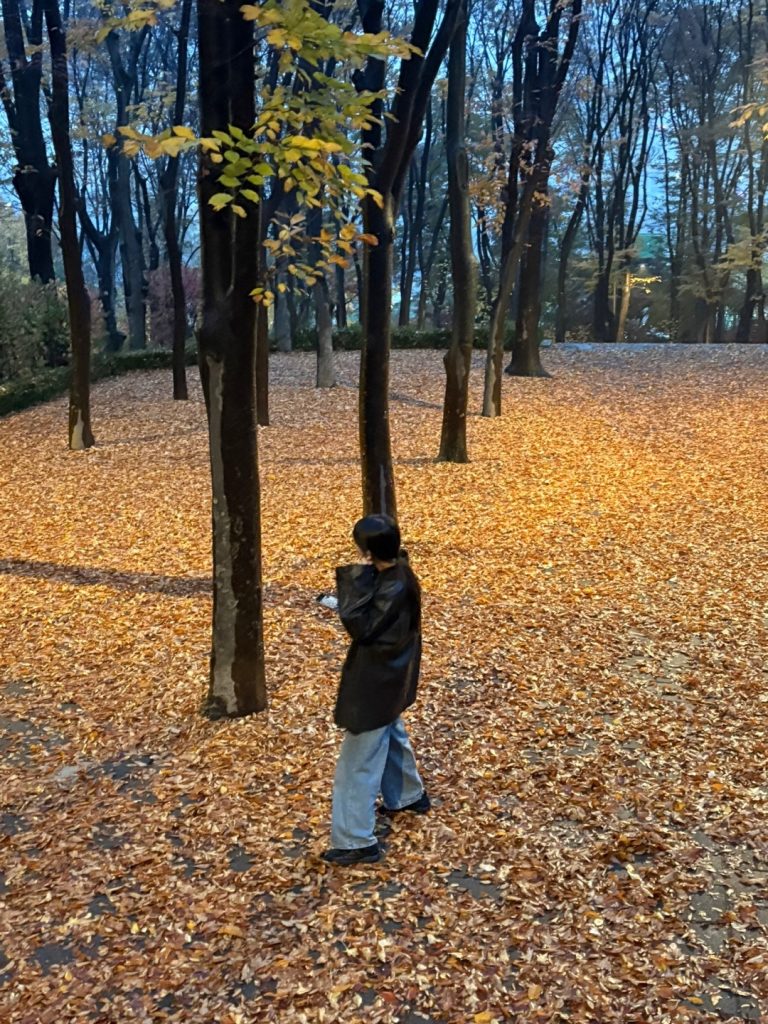
"Strolling through a park covered in autumn foliage"
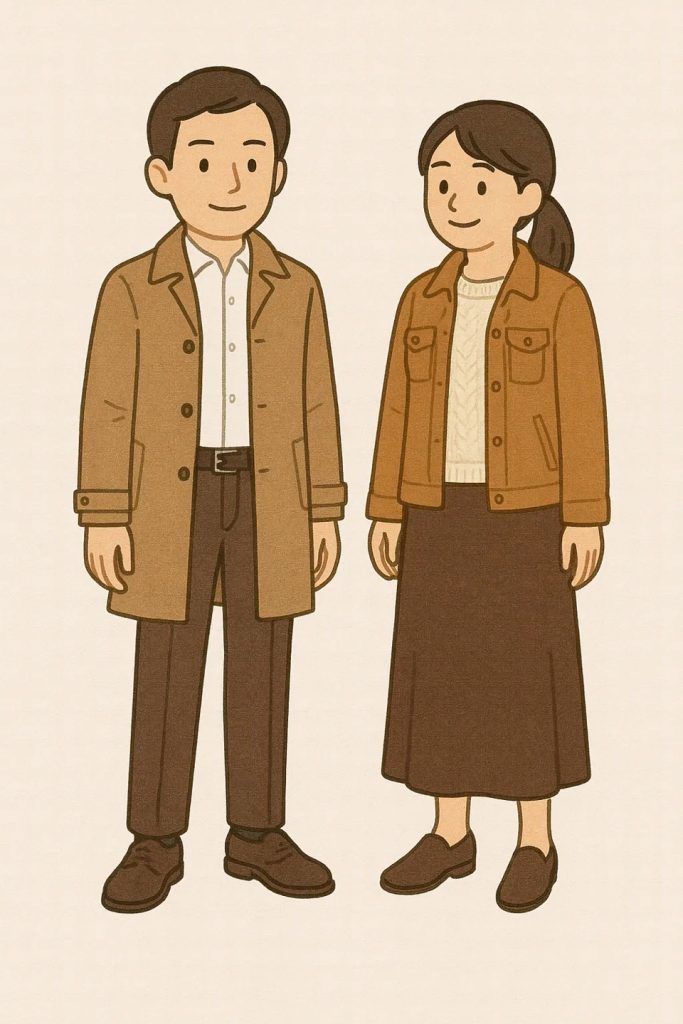
"Autumn style: light coats and layered outfits for cool weather"
With little rain and plenty of sunshine, autumn offers perfect weather for sightseeing.
A light jacket, shirt, or sweater is all you need.
❄️ Winter (December–February)
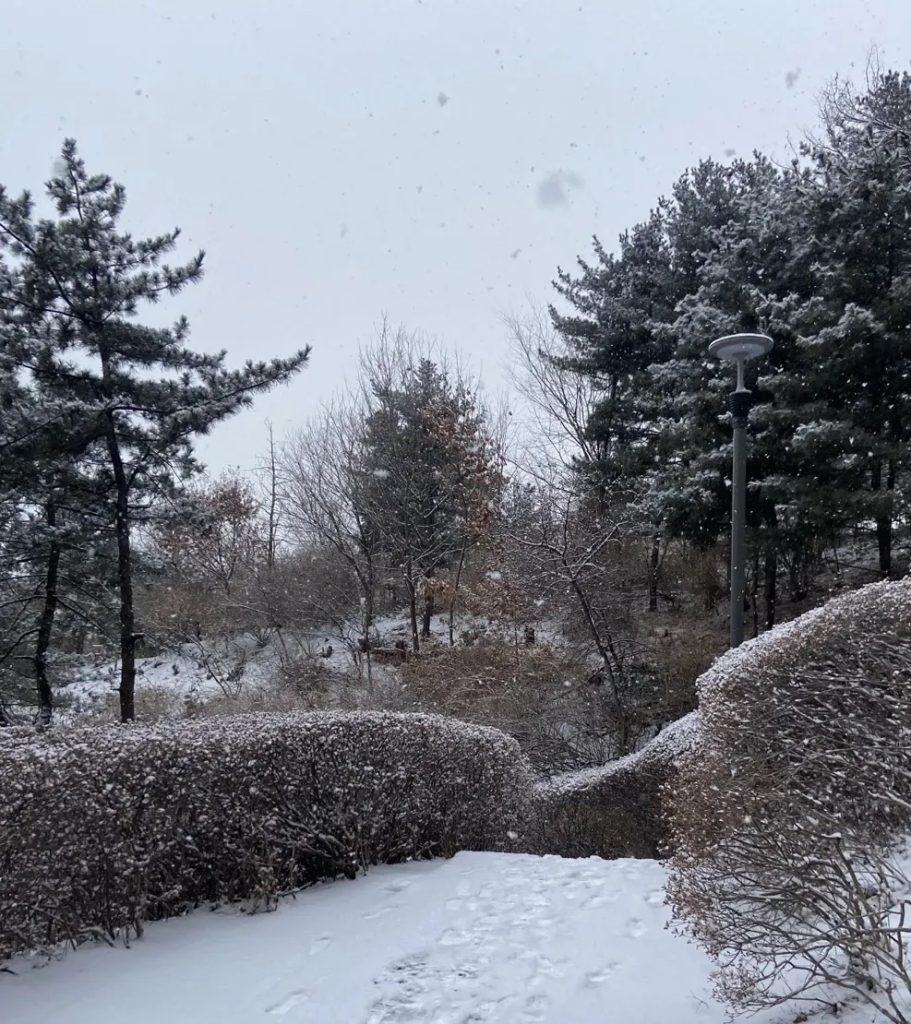
Winter in Korea can be freezing, especially in Seoul and Gangwon Province where temperatures drop below zero.
"Peaceful snowy landscape in a Korean park"
But this season offers unique charms: skiing at Pyeongchang Ski Resorts, joining the Hwacheon Sancheoneo Ice Festival, or enjoying snowy cityscapes from Namsan Tower.
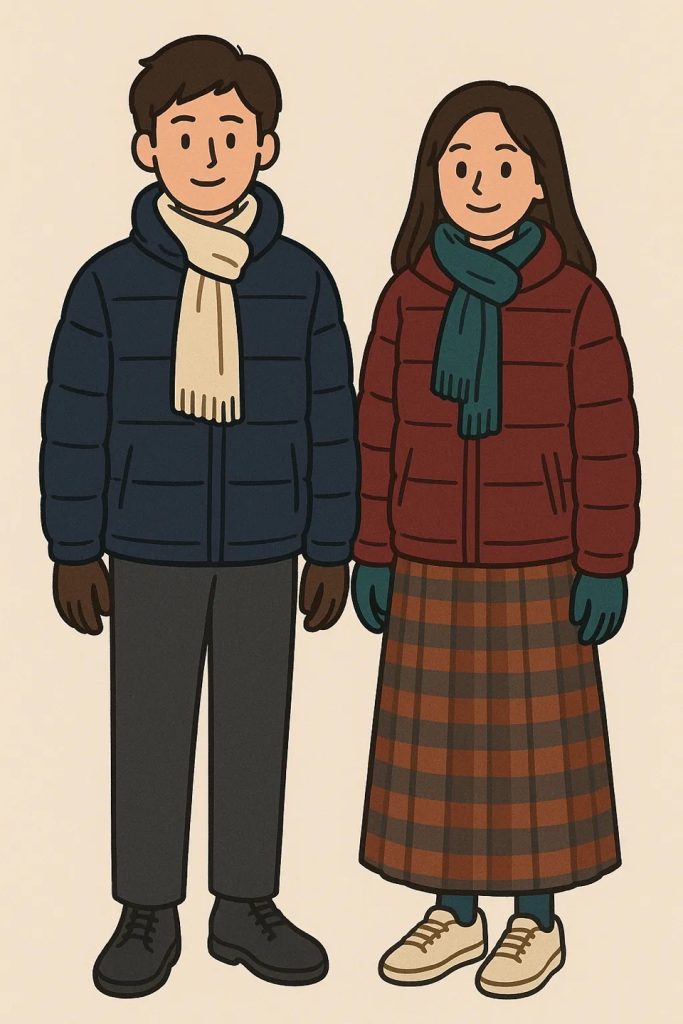
Bundle up with padded jackets, scarves, gloves, and boots — they’re essential for staying warm!
"Winter outfit essentials: padding, scarf, and gloves"
So, how did you like Tips 1 to 3? Doesn’t traveling in Korea sound even more exciting now? From the stunning four seasons to the unique cultural experiences, there’s always something special waiting for you here.
But we’re not done yet! More essential Korea Travel Tips (4–7) are coming up in the next post. Stay tuned—you won’t want to miss them!